Philodendron billietiae
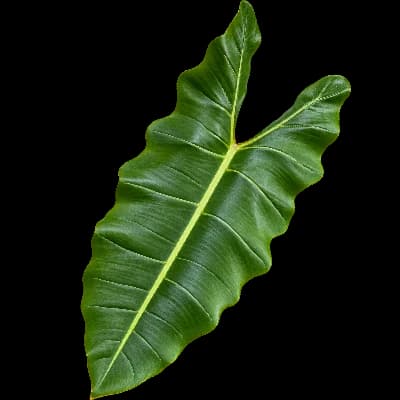
Philodendron billietiae is admired for its elongated arrow-shaped leaves, prominent venation, and distinctive orange petioles. With its bold tropical form and unusual foliage, Billietiae is a popular choice among Philodendron and tropical plant collectors.
₫650,000
Up to 10 per order
3 in stock
Philodendron billietiae is a tropical Philodendron admired for its elongated, arrow-shaped leaves and distinctive orange petioles. The combination of unusual foliage, deep green leaves, and colorful stems makes Billietiae a highly attractive foliage plant.
Even without variegation, the plant creates a strong visual impact through its natural leaf shape and characteristic coloration.
Characteristics of Philodendron billietiae
Billietiae produces elongated leaves with pointed tips and extended lobes toward the petiole. As the plant matures, the leaves can become considerably more impressive in size.
One of its most recognizable features is its orange to orange-red petiole. This vibrant color creates a beautiful contrast against the deep green foliage.
The plant has a climbing growth habit and can produce larger foliage when provided with suitable growing conditions.
Light Requirements
Philodendron billietiae prefers bright, indirect light.
A position near a window with filtered natural light can provide suitable conditions. Good lighting helps maintain healthy foliage and supports new leaf growth.
Avoid prolonged exposure to intense direct sunlight, which may scorch the leaves.
Watering
Billietiae prefers moderately moist growing media but should not remain waterlogged.
Check the upper layer of the growing medium before watering. When the surface has dried slightly, water thoroughly and allow excess water to drain away.
Watering frequency should be adjusted according to temperature, light, humidity, and pot size rather than following a fixed schedule.
Growing Medium
An airy, well-draining growing medium is ideal for Philodendron billietiae.
A mixture of orchid bark, perlite, coco coir, and other coarse organic materials can provide a good balance between moisture retention and aeration.
Using a container with adequate drainage also helps prevent excess water from accumulating around the roots.
Humidity and Temperature
As a tropical plant, Billietiae generally performs well in warm environments with moderate to high humidity.
Stable humidity can help new leaves unfurl more successfully and reduce dry leaf margins.
However, high humidity should be combined with good airflow. A constantly enclosed and humid environment can increase the risk of fungal and root problems.
The Distinctive Orange Petiole
The orange petiole is one of the features that makes Philodendron billietiae particularly recognizable.
From a distance, the plant may appear relatively simple with its large green leaves. Up close, however, the bright orange petioles provide a striking contrast.
This characteristic also makes Billietiae easy to distinguish within a collection of Philodendrons.
Supporting Its Climbing Growth
As the plant matures, providing a climbing structure such as a moss pole can encourage vertical growth.
A suitable support gives the plant room to climb and can help it develop larger foliage over time.
Is Philodendron billietiae Easy to Grow?
Billietiae can be relatively easy to care for when grown in stable conditions.
The most important factors are suitable lighting, an airy growing medium, appropriate watering, and consistent humidity.
Problems are more likely to occur when the plant is overwatered, grown in insufficient light, or exposed to sudden environmental changes.
Common Problems
Yellowing leaves can occur when the growing medium stays wet for too long or when the root system is experiencing stress.
Crispy leaf margins may be associated with low humidity, underwatering, or significant environmental fluctuations.
Regularly inspect the undersides of leaves and areas around the petioles for pests such as thrips and spider mites.
Propagation
Philodendron billietiae can be propagated through stem cuttings containing viable nodes.
A healthy stem section with a node can be placed in a moist but well-aerated propagation medium to encourage new roots and shoots.
During propagation, the environment should remain appropriately moist without becoming excessively wet, which can increase the risk of stem rot.
Billietiae in a Plant Collection
With its elongated foliage, unusual leaf shape, and striking orange petioles, Philodendron billietiae makes an excellent statement plant.
It can be grown indoors in a bright location or combined with other Philodendrons in a tropical foliage collection.
The contrast between its deep green leaves and orange petioles allows Billietiae to stand out even when surrounded by highly variegated plants.
Final Thoughts
Philodendron billietiae is a distinctive Philodendron whose beauty comes from its natural leaf shape and coloration. Its elongated arrow-shaped leaves combined with bright orange petioles give the plant an instantly recognizable appearance.
With bright indirect light, an airy growing medium, suitable humidity, and consistent watering, Billietiae can develop into an impressive foliage plant and become a striking addition to any Philodendron collection.