Monstera
GREEN ON GREEN
Green variegation on a Deliciosa leaf: how to read the pattern, water with restraint, and when to let it climb.
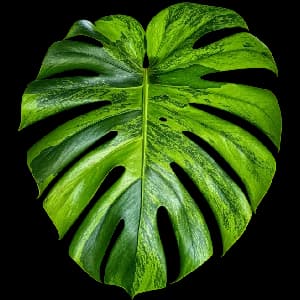
Monstera Green on Green is a distinctive form of Monstera deliciosa for collectors who appreciate subtle beauty. Instead of producing obvious white or yellow sections, Green on Green creates its variegation through different shades of green. Lighter lime, olive, or pale green areas appear against deeper green foliage, creating a delicate but highly captivating pattern.
Monstera Green on Green
What makes Green on Green fascinating is that its contrast comes from differences in tone rather than completely different colors. A single leaf may display fine marbled lines, lighter green streaks, or larger patches of brighter green. Some plants show more sectorial patterns, while others develop a softer marbled appearance.
Because the color transition is subtle, Green on Green can look completely different from a distance compared with up close. From across the room, it retains the natural appearance of a lush green Monstera. Look closer, however, and layers of different green tones begin to reveal themselves across the leaf.
Green on Green Can Be Difficult to See on New Leaves
One of the most interesting aspects of Green on Green is that the pattern may not be obvious when a new leaf first unfurls. A fresh leaf can appear almost entirely green or show only very subtle differences in tone. As the leaf matures and hardens, the contrast between the different shades of green can become much more visible.
This makes every new leaf an interesting moment for growers. A leaf that initially looks almost completely green may gradually reveal its marbling and lighter green sections over the following weeks.
Green on Green Leaf Form
Alongside its unusual coloration, Green on Green retains the characteristic growth and foliage of Monstera deliciosa. As the plant matures, its leaves can become large and develop deep splits and fenestrations. The combination of large foliage and subtle green-on-green patterning gives the plant a very natural appearance.
Monstera is also a climbing plant and can produce aerial roots as it grows. Providing a moss pole or other support can encourage vertical growth rather than allowing the plant to spread outward.
Light Requirements
Green on Green benefits from bright, indirect light. Good lighting supports healthy growth, larger foliage, and effective photosynthesis.
It is important to note that light does not create Green on Green variegation. When the plant already carries the characteristic pattern, suitable light primarily supports healthy growth and helps the existing coloration show well.
A bright location with filtered natural light is therefore ideal, while prolonged exposure to harsh direct sunlight should be avoided.
Soil and Growing Medium
An airy, well-draining growing medium is important for Monstera. The roots need moisture but also require access to oxygen. Compacted soil or a medium that stays wet for too long can weaken the root system.
A chunky growing medium that drains efficiently while retaining moderate moisture can provide a good balance. A container with drainage holes is equally important because it allows excess water to escape.
Watering Green on Green
Green on Green should not be watered according to a rigid schedule. Instead, check the moisture level of the growing medium before watering. Once the upper layer has dried sufficiently, water thoroughly so moisture reaches the root ball and excess water drains from the bottom of the pot.
After watering, allow excess water to drain completely and avoid leaving the pot standing in water. Green on Green appreciates moderate moisture but does not perform well when the growing medium remains constantly saturated.
Humidity and Growing Environment
As a tropical Monstera, Green on Green generally performs well in warm conditions with relatively stable humidity. Very dry air can cause the tips and edges of the leaves to become dry, while stagnant conditions with poor airflow are also undesirable.
When grown indoors, choose a bright position with gentle air circulation. Avoid placing the plant directly in the airflow from an air conditioner or heater.
Keeping Green on Green Leaves Looking Their Best
The beauty of Green on Green lies in its subtle variations in color, so dust on the leaf surface can make the pattern harder to appreciate. Gently wiping the leaves with a soft, slightly damp cloth can help keep the foliage clean and allow the different shades of green to stand out.
It is also a good opportunity to inspect the underside of the leaves and around the petioles, where pests can sometimes go unnoticed.
Green on Green Patterns Can Change
Not every leaf on a Green on Green plant will necessarily look the same. One leaf may develop large areas of lighter green, while another may show only delicate marbling. Sources describing Green on Green recognize both marbled and sectorial expressions, with patterns varying from leaf to leaf.
This variation is part of the plant's appeal. Instead of knowing exactly what the next leaf will look like, growers get to discover how the plant will express its pattern each time new foliage emerges.
When Should You Repot?
When the root system has outgrown its container, the plant may benefit from being moved into a slightly larger pot. Avoid choosing a container that is dramatically larger, as excess growing medium can retain moisture for too long.
A moderately larger pot combined with an airy growing medium gives the roots additional space while keeping moisture easier to manage.
Common Problems
Yellowing, wilting, or browning leaf tips can all indicate that the growing conditions should be reassessed. Consider light, moisture levels, drainage, and root health together rather than focusing only on the affected leaf.
With Green on Green, it is also important not to mistake a newly unfurled leaf with barely visible patterning for a loss of variegation. The pattern can become more pronounced as the leaf matures.
Green on Green – Beauty for the Subtle-Plant Lover
Green on Green does not rely on dramatic contrast to make an impression. Its beauty comes from the delicate transition between deep green, olive, lime, and lighter green tones across the same leaf.
That is what gives Green on Green its natural character. From a distance, it can look like a beautifully healthy green Monstera. Up close, however, hidden layers of color begin to reveal themselves like a pattern painted in different shades of green. And with every new leaf, the plant has the potential to reveal something slightly different.
Reviews
No reviews yet. Be the first to share your experience.