Monstera
Form Unniiae
Juvenile leaves plaster themselves to wood: give it a board, not a hanging basket.
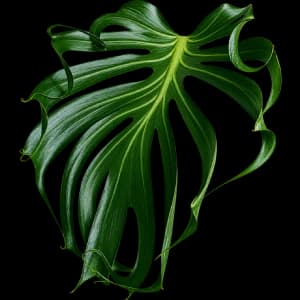
Monstera deliciosa ‘Unniiae’ is a distinctive form of Monstera known for its unusual leaf shape and structure. Rather than being defined primarily by color, Unniiae stands out through the architecture of its foliage. Its leaves can be noticeably thicker and firmer than those of a typical Monstera deliciosa, with deep fenestrations, textured surfaces, and naturally wavy edges. The Aroid Cultivars Registry also highlights its distinctive leaf shape, structure, and tendency to orient its foliage toward the light.
What Makes Monstera Unniiae Special?
Unniiae is known as a sport mutation of Monstera deliciosa, meaning that a spontaneous mutation caused the plant to develop characteristics that differ from the usual form. What makes Unniiae particularly interesting is that its uniqueness comes from its morphology rather than simply from unusual coloration. Mature leaves can become thick, firm, and somewhat concave, with a pronounced vein structure on the underside. Its deep splits give the foliage a sculptural appearance that is immediately recognizable.
Another fascinating characteristic is the way the leaves respond to light. As the plant matures, the foliage can orient itself upward toward the light, eventually giving the plant a distinctive upright appearance. The leaf margins can also develop a naturally wavy or ruffled shape, particularly on juvenile leaves, creating an interesting combination of softness and structure.
Understanding Monstera
Monstera is a group of tropical plants known for large foliage and climbing growth. In nature, the plants use their stems and aerial roots to find support and climb toward better light. When grown indoors, providing a moss pole or another form of support can encourage the plant to grow vertically and develop a more structured appearance.
For Unniiae, the leaf shape itself is one of the most fascinating aspects of the plant. As it matures, changes in leaf size, fenestration, texture, and orientation can make each stage of growth feel slightly different.
Light Requirements
Light is an important part of helping Unniiae grow well and express its characteristic foliage. The plant generally benefits from bright, indirect light. A position near a window with filtered natural light can provide a suitable environment.
Too little light may slow growth and contribute to longer spacing between nodes. On the other hand, strong direct sunlight for extended periods can scorch or damage the leaves.
Soil and Growing Medium
A healthy root system provides the foundation for strong Monstera growth. The growing medium should remain airy and well-draining while retaining enough moisture to support the roots. Avoid compacted soil or a medium that stays saturated for long periods, as Monstera roots need both moisture and oxygen.
A container with drainage holes is also important. Allowing excess water to escape makes it easier to control moisture levels and reduces the risk of root-related problems.
Watering Monstera
Monstera does not necessarily need to be watered on a fixed schedule. A better approach is to check the growing medium before watering. When the upper layer has dried to an appropriate level, water thoroughly so moisture reaches the entire root ball and excess water drains from the bottom of the pot. Then allow the medium to dry somewhat before watering again.
The main thing to avoid is keeping the roots constantly wet. Prolonged saturation can reduce oxygen around the roots and increase the risk of root rot.
Humidity and Growing Environment
As a tropical plant, Monstera generally appreciates warm conditions and relatively stable humidity. However, high humidity does not mean that the soil should remain wet all the time. A healthy environment depends on a balance between atmospheric humidity, good drainage, and periods of drying between waterings.
When growing the plant indoors, avoid placing it directly in the airflow from an air conditioner or heater. Continuous dry airflow can cause the tips and edges of the leaves to become dry.
Keeping Unniiae Leaves Looking Their Best
With a plant as structurally interesting as Unniiae, keeping the leaves clean helps reveal the texture, veins, and deep fenestrations that make the plant so distinctive. Gently wiping the leaves with a soft, slightly damp cloth can help remove accumulated dust.
Cleaning the foliage is also a good opportunity to inspect the underside of the leaves and look for early signs of pests. Regular leaf care not only improves the plant's appearance but also helps maintain effective photosynthesis.
When Should You Repot?
As the root system grows, Monstera may eventually need more space. Indoor plants can often be repotted every 18–24 months, although the timing depends on the plant's growth rate and root development.
Avoid choosing a pot that is dramatically larger than the previous one. Excess growing medium can hold moisture for too long and increase the risk of overwatering. A moderately larger container provides additional room while keeping moisture easier to manage.
Common Problems
Changes in the leaves can sometimes indicate that the growing conditions need adjustment. Yellowing leaves should prompt a check of watering habits and root health. Brown leaf tips or edges can be associated with dryness or unsuitable environmental conditions.
If the leaves begin to wilt, check both underwatering and overwatering. When the growing medium remains wet for too long and the roots become soft or damaged, the plant may be developing root rot and should be inspected promptly.
A Monstera for Leaf-Form Enthusiasts
What makes Monstera Unniiae so appealing is not a particular leaf color, but the architecture of the plant itself. Deep fenestrations, textured foliage, wavy margins, and the distinctive way its leaves orient toward light create an appearance that is quite different from the familiar Monstera deliciosa.
Unniiae has also been documented by the Aroid Cultivars Registry for its distinctive leaf morphology and growth characteristics. For collectors who appreciate Monstera not only for variegation but also for natural mutations in form and structure, Unniiae offers a particularly fascinating expression of the species.
Reviews
No reviews yet. Be the first to share your experience.