Alocasia Scalprum
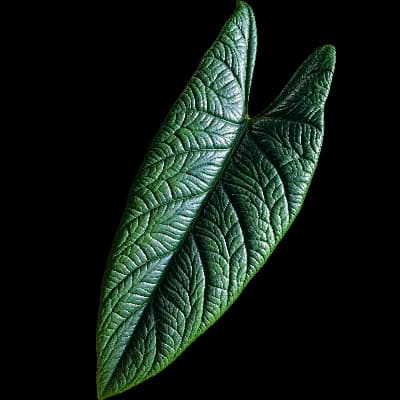
Alocasia Scalprum is admired for its deep green leaves, distinctive textured surface, and bold, rigid form. Its unusual foliage makes it an interesting choice for collectors who appreciate unique Alocasia species and tropical plants.
₫420,000
Up to 10 per order
30 in stock
Alocasia scalprum is an Alocasia plant that benefits from a well-controlled growing environment. For healthy and stable growth, the most important factors are moisture management, proper watering, balanced nutrition, and preventive disease control.
1. Growing Medium
Alocasia scalprum should be grown in a well-aerated medium that helps prevent poor airflow around the roots and waterlogging.
The Alocasia care guidelines recommend a growing medium consisting of:
- Coconut coir
- Properly treated rice husk or carbonized rice husk
- Coconut fiber chunks
- A thin layer of sphagnum moss on the surface
The goal is to maintain adequate moisture while keeping the root zone well aerated.
2. Watering
Avoid watering Alocasia scalprum strictly according to a fixed schedule. Instead, check the moisture level of the growing medium before each watering.
You can check the medium by inserting your finger into the substrate or by using a moisture meter. Water when the surface has dried sufficiently and the moisture level has dropped to the appropriate range.
Water slowly and evenly until you see a small amount of water beginning to drain through the drainage holes at the bottom of the pot.
Best watering time: early morning or late afternoon when temperatures are cooler. Avoid watering at night because prolonged moisture can increase the risk of fungal problems.
3. Fertilizing
Before applying fertilizer to the growing medium, moisten the substrate with clean water about 15–30 minutes beforehand.
Do not apply fertilizer when the growing medium is completely dry, as concentrated fertilizer salts can stress the plant and damage the roots.
Slow-release organic fertilizer or worm castings can be applied periodically. Spread a thin layer over the surface of the medium, cover it with a thin layer of sphagnum moss, and water gently to help the fertilizer break down gradually.
For foliar feeding, the Alocasia care guidelines mention using NPK 30-10-10 combined with seaweed extract or Om Plus as part of the feeding cycle.
4. Fungal Disease Prevention
Preventive fungal management is an important part of Alocasia care. The care guidelines recommend rotating different active ingredients rather than repeatedly using the same fungicide, helping reduce the risk of pathogen resistance.
The recommended rotation includes:
- Week 1: Mancozeb
- Week 2: Antracol
- Week 3: Ridomil Gold or Amistar Top
- Week 4: Return to Mancozeb
Apply treatments during cool or overcast conditions and spray evenly over the stems and leaves.
5. Foliar Sprays and Plant Protection Products
When applying foliar fertilizer or plant protection products, use a fine mist and cover both sides of the leaves evenly.
Pay particular attention to the undersides of the leaves, where stomata are concentrated and where certain pests may hide.
Avoid spraying heavily or using excessive pressure, as this can waste the product and potentially damage the leaves.
When mixing multiple fertilizers or plant protection products, perform a Jar Test before applying the mixture to the entire plant collection.
The guidelines recommend mixing solid formulations before liquid formulations to reduce the risk of precipitation, clumping, clogged spray nozzles, or leaf damage.
6. Suggested 4-Week Care Cycle
The following 4-week cycle can be used as a reference for Alocasia scalprum care.
Week 1 – Root Development and Plant Growth
- Apply N3M + Humic + Boom Roots to the root zone.
- Spray NPK 30-10-10 combined with seaweed extract.
- Apply Mancozeb as a preventive fungicide treatment.
Week 2 – Nutrient Maintenance and Substrate Flushing
- Apply Humic + Boom Roots.
- Flush the growing medium with clean water to help remove excess mineral salts.
- Apply Antracol as part of the fungicide rotation.
Week 3 – Root Stimulation and Leaf Nutrition
- Apply N3M combined with Humic + Boom Roots.
- Spray NPK 30-10-10 + seaweed extract.
- Apply Ridomil Gold or Amistar Top according to the fungicide rotation.
Week 4 – Micronutrient Supplementation
- Apply Combi to provide micronutrients.
- Apply Humic + Boom Roots.
- Add slow-release organic fertilizer or worm castings.
- Apply Mancozeb at the end of the cycle before starting the next rotation.
7. Key Points for Alocasia scalprum Care
If you are new to growing Alocasia scalprum, you do not need to start with a complicated fertilizer and treatment routine.
Focus first on these basic principles:
Use a well-aerated growing medium → check moisture before watering → avoid waterlogging → fertilize only when the medium is adequately moist → apply sprays at the appropriate time → rotate active ingredients.
A healthy root system and well-aerated growing medium provide the foundation for stable Alocasia growth.